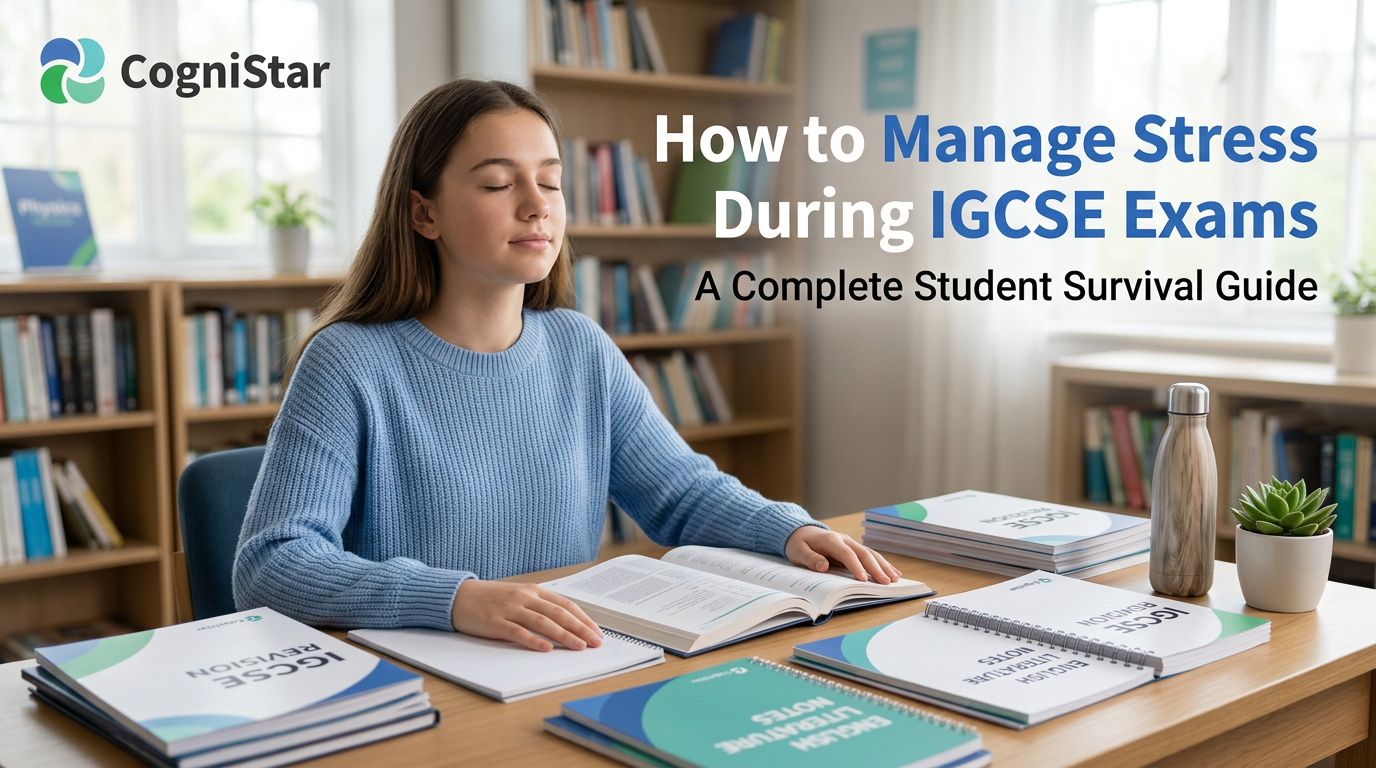
How to Manage Stress During IGCSE Exams
IGCSE exams are important — but they should not control your mental health.
Many students struggle not because the content is too difficult, but because stress affects their focus, memory, and confidence.
This guide will help you manage exam pressure effectively and perform at your best.
Why Do IGCSE Students Feel Stressed?
Understanding the cause of stress is the first step to controlling it.
Common reasons include:
- Fear of low grades
- Parental expectations
- Comparing with friends
- Large syllabus
- Time pressure during exams
Stress becomes dangerous only when it is unmanaged.
How Stress Affects Exam Performance
When stress levels rise:
- Concentration decreases
- Memory recall becomes slower
- Sleep quality drops
- Confidence weakens
Ironically, too much pressure can lower performance — even for well-prepared students.
1️⃣ Create a Realistic Study Plan
Uncertainty increases anxiety.
A clear study plan reduces mental overload.
✅ Break syllabus into weekly goals
✅ Schedule revision time
✅ Include short breaks
✅ Track progress
Structure creates calmness.
2️⃣ Use the 45–10 Focus Method
Study for 45 minutes.
Take a 10-minute break.
This prevents burnout and keeps your brain active.
During breaks:
- Stretch
- Drink water
- Avoid social media overload
3️⃣ Sleep Is Not a Luxury
Many students sacrifice sleep before exams.
This is a mistake.
Lack of sleep:
- Reduces memory retention
- Slows reaction time
- Increases anxiety
Aim for 7–8 hours of sleep daily — especially during exam season.
4️⃣ Control Negative Thoughts
Replace:
❌ "I will fail."
With:
✅ "I prepared well, and I will do my best."
Your brain believes what you repeatedly tell it.
Positive internal dialogue improves performance.
5️⃣ Practice Under Exam Conditions
Fear decreases when something becomes familiar.
- Solve timed past papers
- Sit at a desk
- Avoid distractions
Simulation builds confidence.
6️⃣ Limit Comparison
Every student studies differently.
Comparing yourself to others increases unnecessary pressure.
Focus on:
- Your improvement
- Your weak areas
- Your own progress
Growth is personal.
7️⃣ Physical Activity Reduces Stress
Light exercise:
- Improves mood
- Reduces anxiety
- Enhances focus
Even 20 minutes of walking daily makes a difference.
8️⃣ Talk About Your Stress
Don’t keep everything inside.
Talk to:
- Parents
- Teachers
- Friends
- Academic mentors
Sometimes speaking reduces half the pressure.
When Is Stress a Problem?
If you experience:
- Panic attacks
- Constant insomnia
- Loss of appetite
- Severe anxiety
Seek guidance from a trusted adult or counselor.
Mental health matters more than grades.
Final Advice for IGCSE Students
Exams are important — but they are not your entire future.
Thousands of students succeed every year because they:
- Study consistently
- Manage stress
- Practice regularly
- Maintain balance
Stay disciplined, but stay healthy.
Confidence + Preparation = Success.
#IGCSE #IGCSEEnglish #OnlineLearning
#BritishCurriculum #CogniStar #StudyOnline #IGCSETips #EnglishLearning
#Grade5to10 #ExamSuccess
#BritishCurriculum #CogniStar #StudyOnline #IGCSETips #EnglishLearning
#Grade5to10 #ExamSuccess
Comments (0)

Courses
Recent posts

Brief Overview of the Importance of ...
2 Sep 2025
Igcse Subjects Explained
25 Nov 2025
Why Choose IGCSE Exam Preparation ...
2 Sep 2025


