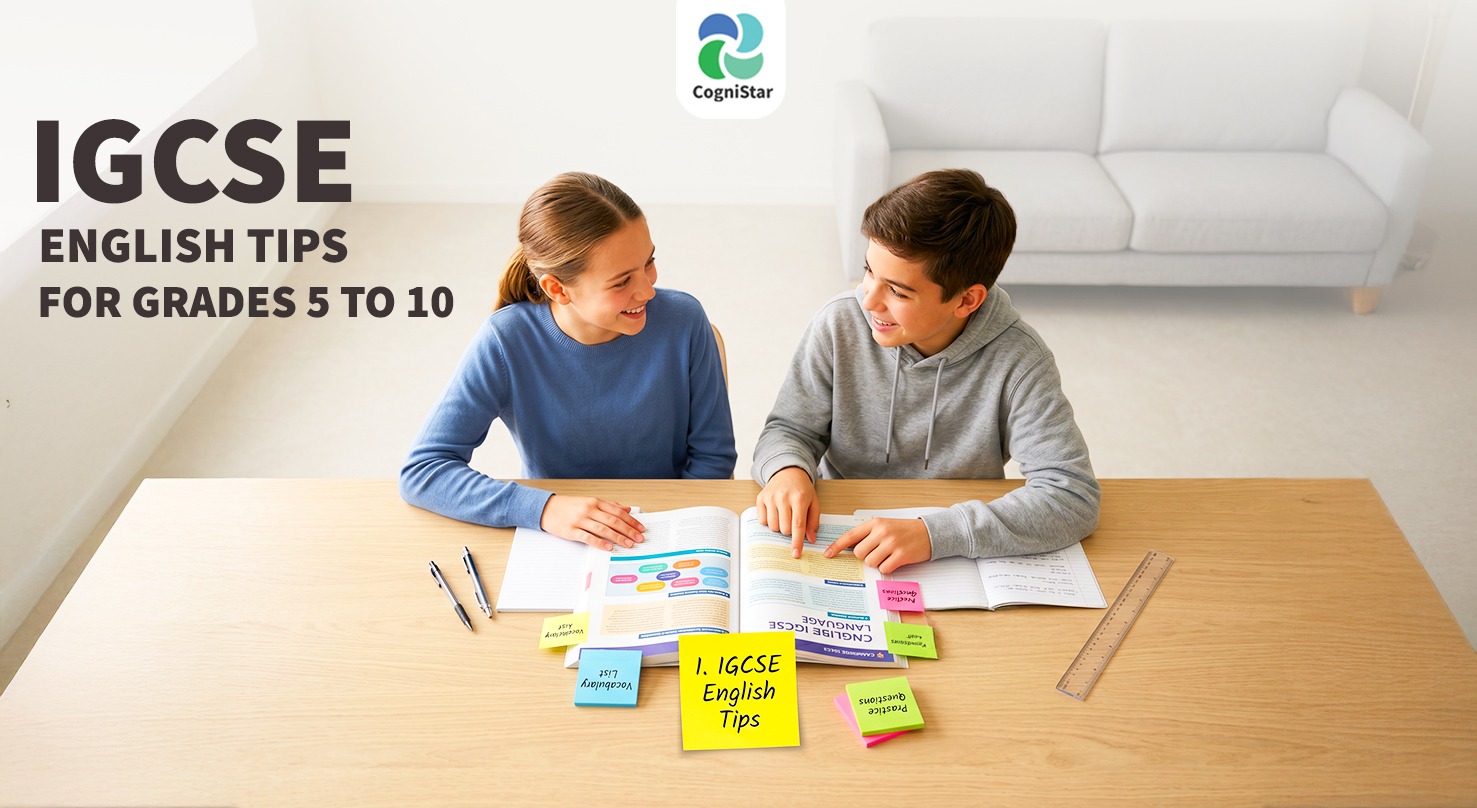
Mastering English in the IGCSE
curriculum is one of the most important academic goals for students in Grades 5
through 10 Whether your child is just beginning their British curriculum
journey or preparing for final IGCSE exams, having the right strategies in
place makes all the difference.
At CogniStar, we have helped hundreds of
students achieve measurable improvements through structured, expert-led
learning.
One of the most effective
strategies is building a consistent reading habit. Students who read regularly
— novels, newspapers, or even quality online articles — develop a stronger
vocabulary and better comprehension naturally. Reading also exposes students to
varied sentence structures and writing styles, which directly supports their
own written work.
Grammar is the foundation of all
English skills. Students in Grades 5 to 7 should focus on mastering tenses,
subject-verb agreement, and basic sentence construction. By Grades 8 to 10, the
focus should shift to complex sentence structures, punctuation rules, and
stylistic choices. Regular grammar exercises — not just memorising rules, but
applying them — are key.
Comprehension skills require a
specific technique. Students should practise reading a passage carefully,
identifying the main idea, supporting details, and the writer's tone or
purpose. Answering comprehension questions with precise, text-based evidence is
a skill that improves with targeted practice and feedback from qualified
teachers.
Writing is arguably the most
important element of IGCSE English. Students are assessed on their ability to
write clearly, creatively, and with purpose. Practising different writing types
— narrative, descriptive, argumentative, and informative — is essential. Every
piece of writing should have a clear structure: introduction, developed body
paragraphs, and a conclusion.
Time management during exams is
another critical skill. Many students know the material but struggle under
timed conditions. Practising past papers within strict time limits prepares
students mentally and strategically. At CogniStar, our exam-focused sessions
include timed practice and detailed feedback, helping students become confident
and efficient.
Vocabulary expansion should be a
daily habit. Students can keep a vocabulary journal, noting new words, their
meanings, and example sentences. Using these words actively in speaking and
writing cements them in long-term memory. Apps, flashcards, and word-of-the-day
challenges are all excellent tools.
Finally, the importance of expert
feedback cannot be overstated. Students who receive regular, detailed feedback
from experienced teachers improve significantly faster than those who study
alone. CogniStar's live, interactive classes ensure that every student gets
personal attention, targeted correction, and encouragement to reach their full
potential.
Whether your child is in Grade 5 discovering the joy
of language or in Grade 10 preparing for IGCSE exams, the right support system
is everything. A structured curriculum, dedicated teachers, and consistent practice
are the three pillars of English language success.
IGCSE English
tips, English for Grade 5, English for Grade 10, British curriculum English,
IGCSE study tips
Comments (0)

Courses
Recent posts

Brief Overview of the Importance of ...
2 Sep 2025
Igcse Subjects Explained
25 Nov 2025
Why Choose IGCSE Exam Preparation ...
2 Sep 2025


